

RETRIEVER BREED QUALIFICATON TEST
The Retriever Breed Test is a breed instinct test that can be taken by Retriever dogs over 8 months old. The purpose of the test is to assess whether the dog's character is typical of a particular Retriever breed and whether the dog has the prerequisites to be trained to retrieve small game and/or for Retriever hunting tests. Evaluating breed instincts also helps to assess the dog's breeding value.
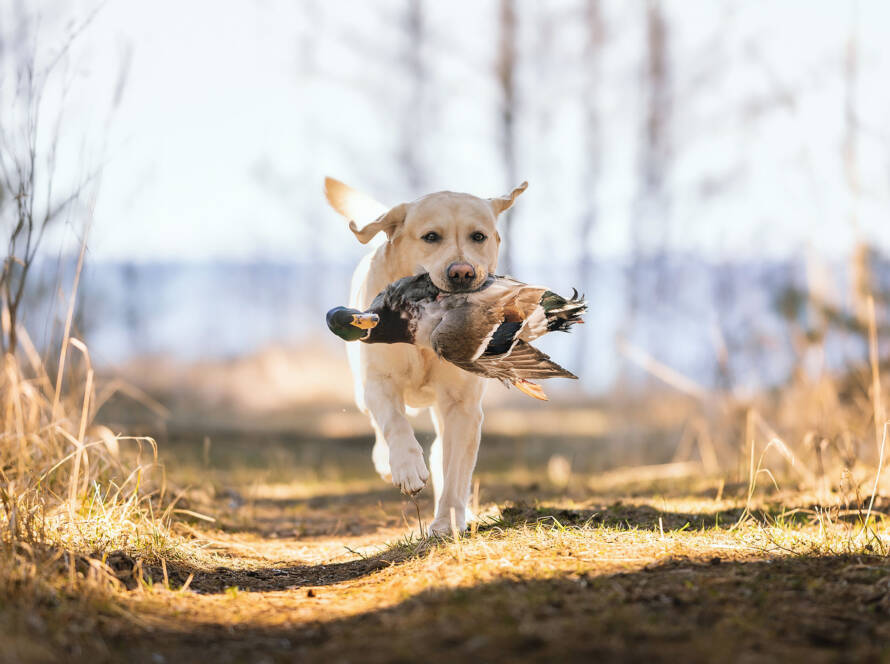
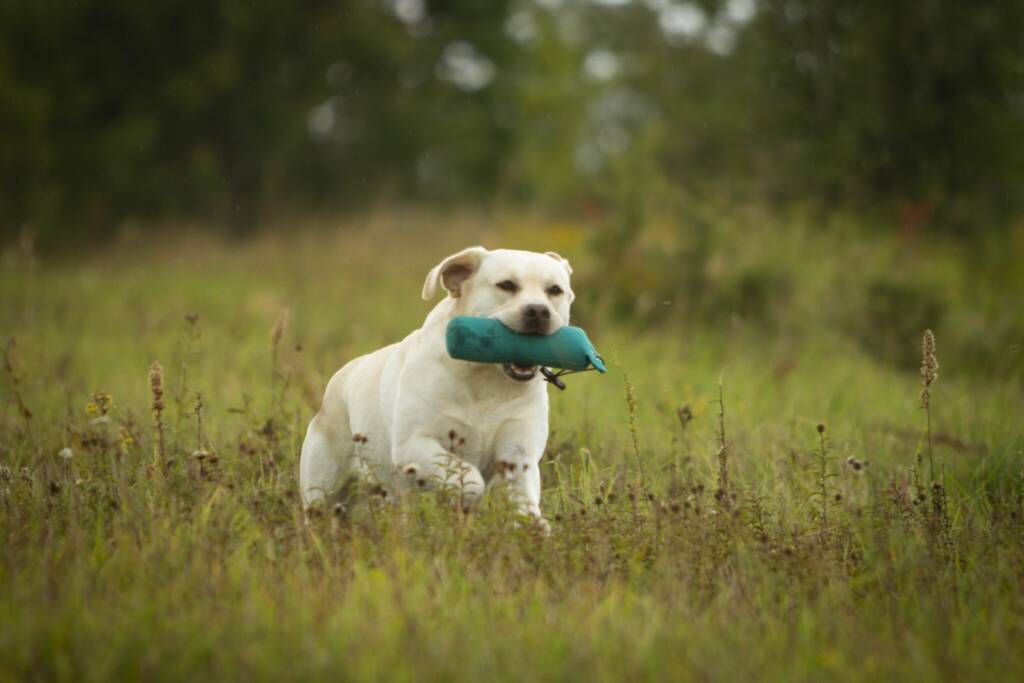
Retrievers can be tested with either a prey or a dummy. In the prey test, ducks are used in the water, pheasants or crows are used in the field, and a rabbit is used on the trail. In the dummy test, special textile retrieval objects are used, i.e. dummy‘sid.
A dog that has passed the breed test with a catch can apply for an international FCI working certificate, which gives the right to register the dog in the working class at all shows and allows the confirmation of the national and international outdoor champion title. A dog that has passed the breed test with a dummy can apply for a national working certificate, which gives the right to register the dog in the working class at national, group and specialty shows and allows only the confirmation of the EST V CH title.
Training and participating in retriever trials provides an opportunity to give your dog a job that is specific to the breed. Many dogs enjoy doing what they were bred to do. Breed trials help keep your dog active, engaged, and cooperative. Training increases the understanding between the dog and the handler and teaches the dog to control its impulses and cooperate with the handler. Although this is an instinct test for retrievers, it is worth preparing your dog for a breed test. Basic obedience is required; the dog should come when called and agree to hand over items to the handler.
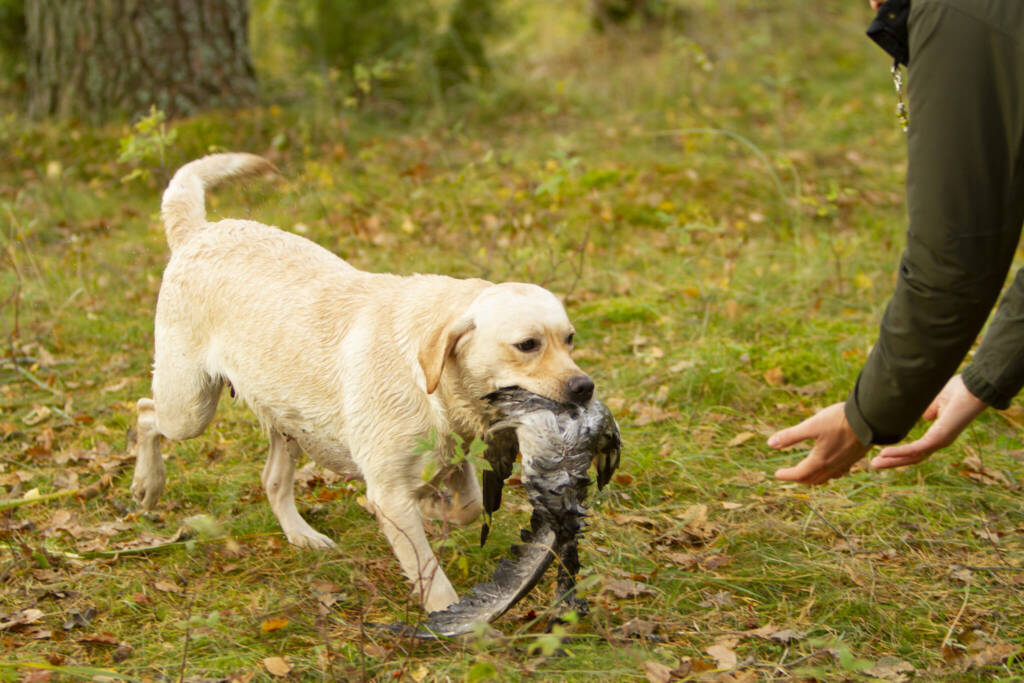
Foto: My Brand Labradors
The Retriever breed test consists of four parts: sociality assessment, water work, search and track. The test evaluates the dog's social behavior, swimming ability, retrieval ability, search drive, prey capture, retrieval ability and surrender, reaction to gunfire, tracking, and cooperation with the handler.
1. Social behavior
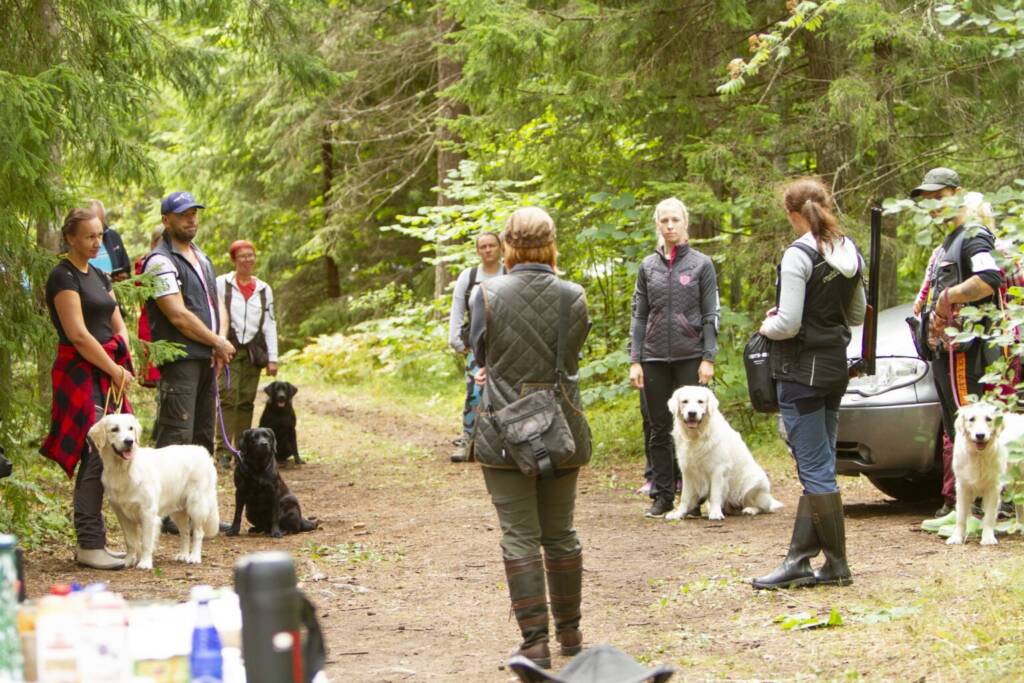
The judge gathers the handlers and dogs around him, a few meters apart, and introduces the test. The judge shakes hands with each participant, and the dogs are expected to behave socially and friendly.
The first dog then begins the water task and the other dogs go to the cars or to the waiting area to wait their turn. Each dog performs the test without other dogs in sight.
2. Water work
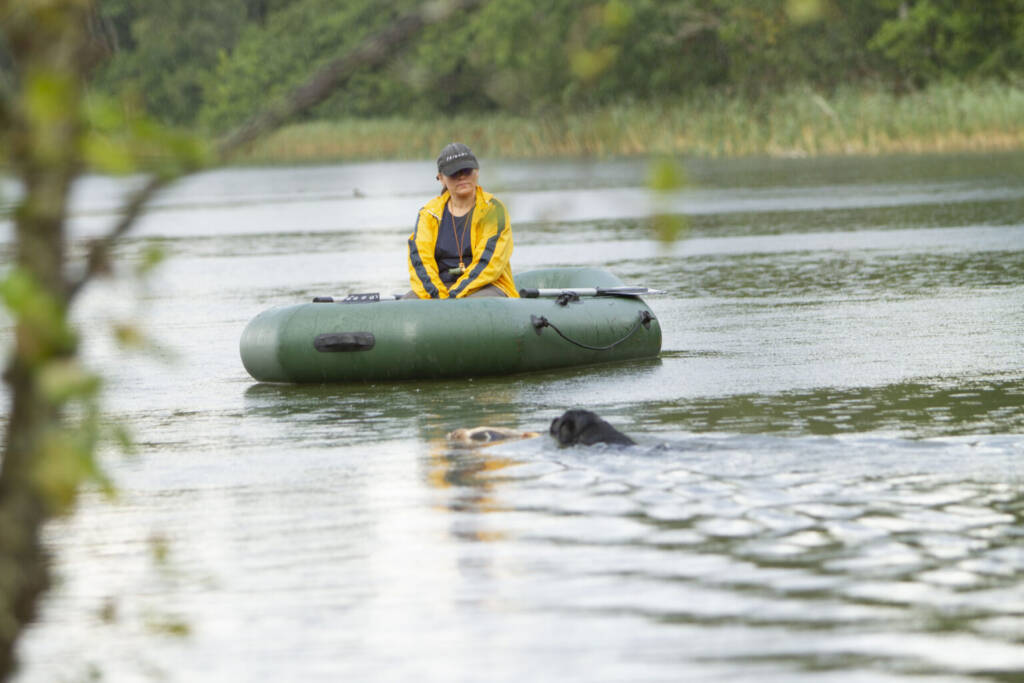
Two birds are thrown into the water for the dog. The judge throws the first bird into the water on the shore to see if the dog is willing to go into the water and is interested in retrieving the bird. If this is successful, the second bird is thrown into the water from a boat about 20 meters from the shore. Before the second throw, a gunshot is fired, the gunman is clearly visible to the dog and not very close. The dog should at least retrieve the birds into the water on the shore, ideally to the dog handler.
3. Search
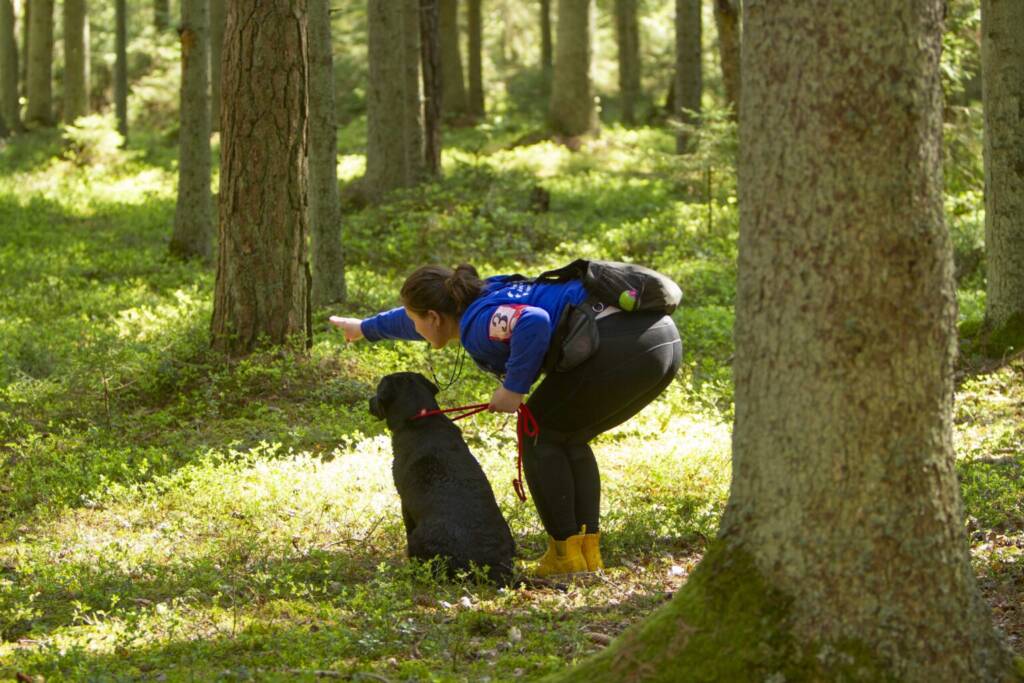
Once the dog has completed the water task, it continues the test with a retrieval task. Five birds are placed on the terrain, the furthest of which is at least 50 meters away. The dog is leashed next to the handler, the gunner fires a shot, which also throws a sixth bird in such a way that the dog sees the throw but may not see the landing site. The assistants and the gunner move away from the terrain and the judge gives permission to send the dog to retrieve the birds. The dog must retrieve a sufficient number of birds to ensure that its search drive does not wane. The dog must have enough confidence in its work to find and retrieve even the furthest bird. The dog should bring the birds close to the handler, preferably in his hand.
4. Trace
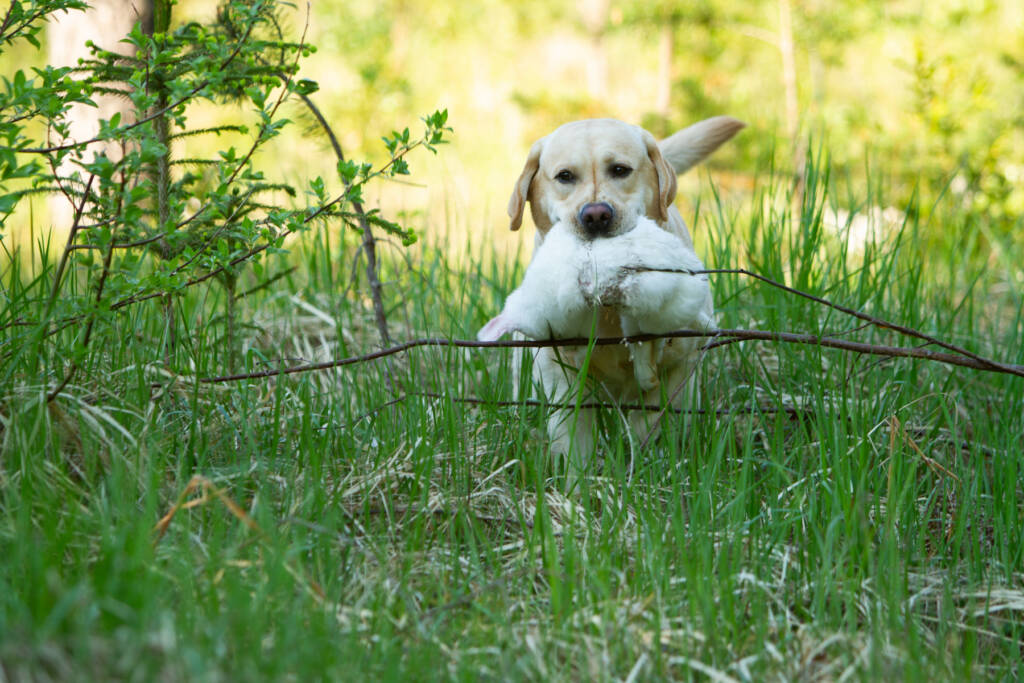
After the dog is brought back, the judge verbally evaluates the dog's work and announces whether the dog is allowed to continue on the trail. Being allowed on the trail requires that all previous tasks have been completed positively. The trail is carried with the hare to the dogs after all the dogs have successively completed the water work and search. The trail is approximately 80 m long and has been carried taking into account the natural features of the terrain. When the dog is on the trail, the other dogs must be hidden. The dog must find the hare itself and bring it to the handler.
To pass the test, it is important that the dog receives a “pass” result in all assessed characteristics. The judge may repeat the tasks to verify the dog’s instincts and, if necessary, help the dog. The test is interrupted if the dog has no desire to work at all, is very afraid of noise, breaks or scatters the prey, refuses to go into the water, is aggressive towards other dogs and people, barks or whines so disturbingly that the test cannot be carried out, gets out of the handler’s control or their cooperation is so inadequate that the test cannot be carried out.
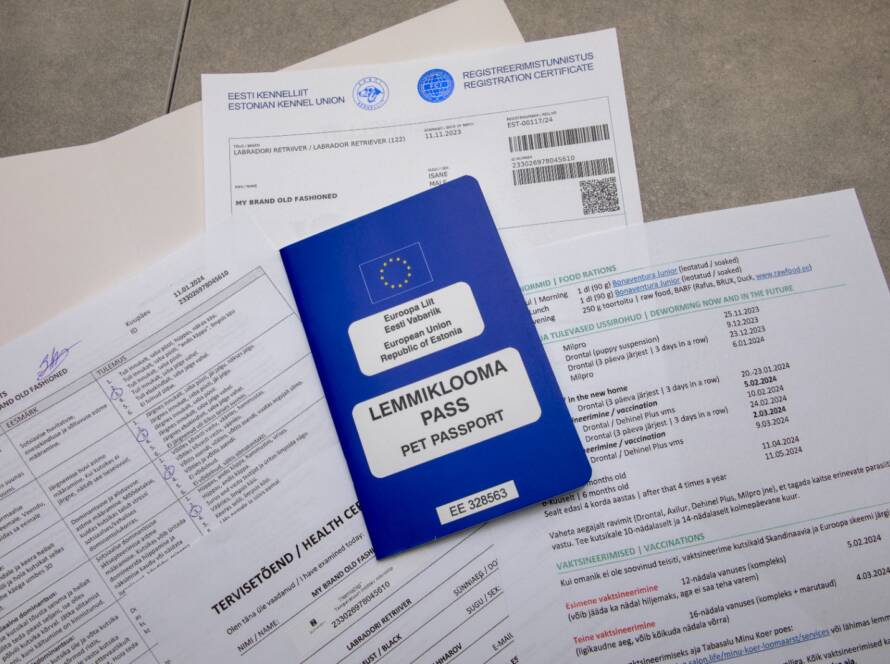
A dog that passes the breed test will receive a corresponding diploma, on the basis of which it can apply for an international working certificate from the Estonian Kennel Club.
You can find the rules for the various retriever tests here. From the Estonian Kennel Club Retriever Collection page.