

WHAT DOES HNPK MEAN?
Dry nose syndrome or hereditary nasal parakeratosis (HNPK)[1]) is a skin disease that affects the nasal septum of a dog. In milder cases, a slightly dry and rough strip develops along the nasal septum, which does not interfere with the dog's life and sometimes goes unnoticed by humans. In more severe cases, deep cracks and bleeding fissures develop inside the nose, which require treatment. There are also cases where the entire nose and the mucous membranes surrounding it can become depigmented.
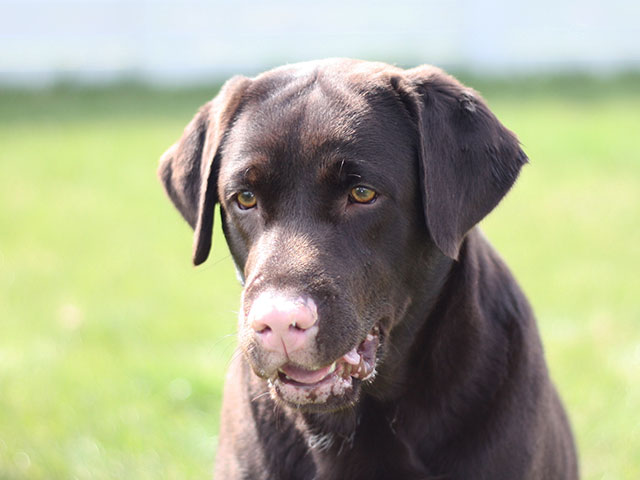
Completely depigmented nose. Photo by My Brand Labradors.
WHO HAS THIS?
The disease occurs in Labrador retrievers or mixed-breed dogs descended from them (Labradoodles, Labrador-Golden mixes, etc.)[2]). The disease only appears when the dog reaches sexual maturity, usually between 6 and 12 months of age, and occurs in dogs of both sexes. The disease is also not related to any color, it can occur in black, brown and yellow Labradors. The disease is not life-threatening, does not cause any other ailments for the dog and, if lucky, may only be an aesthetic problem.
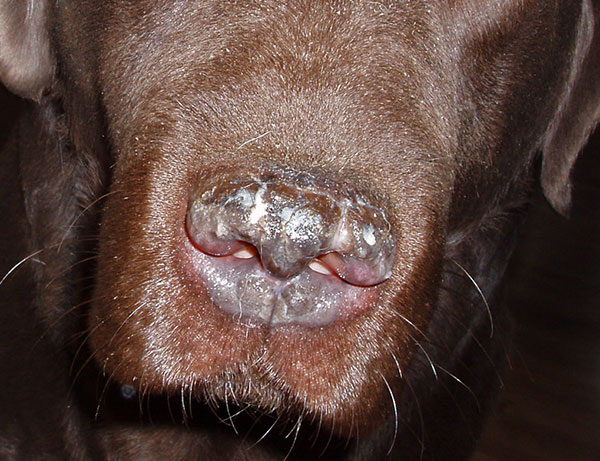
Cleft nose before treatment. Photo by My Brand Labradors.
HOW DO I KNOW IF MY DOG HAS IT?
Although breeders have heard about dry noses for years, diagnosing HNPK has not been an easy task and it is not always recognized today. Over the years, theories have been put forward that the dog burned its nose on a hot grill, or loves to dig and plow the ground with its nose, has a sun allergy, or has lupus.
The name and description of the disease appeared in the literature only in the late 2000s, and the first to come up with a paid genetic test was the Genoscoper laboratory in Finland. Today, several laboratories around the world offer the HNPK test under the patent, and testing has become popular across the ocean in recent years. According to preliminary data, about 10% of Labrador Retrievers carry the HNPK gene, which means that they are either carriers or sufferers of the disease.[3].
HNPK testing is easy and accessible to everyone, even at home. For testing, a sample is taken from the dog's cheek with a cotton swab and sent to the laboratory in an envelope. The sample is painless for the dog and does not require anesthesia or anesthesia. The test result will result in one of the following options: Normal (clean, no mutated gene found), Carrier (carrier, has a mutated gene) or Affected (sick, has two mutated genes).
HNPK is caused by a gene mutation in the SUV39H2 gene[4]The disease is inherited in a monogenetic autosomal recessive manner, which means that for the disease to manifest, it is necessary to receive a mutated gene from both parents. This means that if a dog has dry nose syndrome, both of its parents must be at least carriers of the disease.
HOW TO TREAT?
Treating the disease primarily involves moisturizing the nasal septum and using antibiotic ointments if necessary. Breeders' forums share successful experiences with a vitamin E-rich diet and the use of natural ointments or hygienic lipsticks.
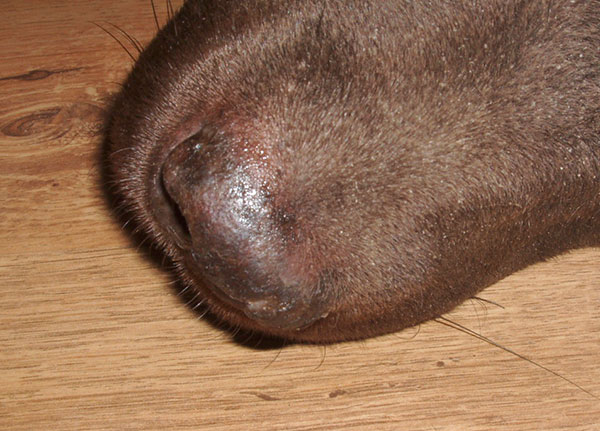
Same nose after one month of treatment with supplements and hygienic lipstick. Photo by My Brand Labradors.
CAN DOGS WITH DRY NOSES BE USED IN BREEDING?
Below is a table illustrating the inheritance mechanism of HNPK:
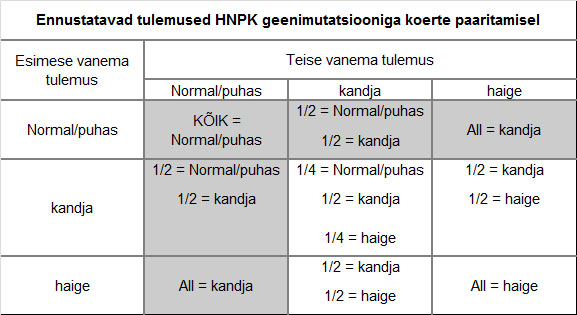
Since two mutated genes can produce offspring that suffer from the disease, it is strongly recommended to only mate mutation carriers with dogs that test clear to avoid the birth of affected puppies.
[1] Hereditary Nasal Parakeratosis (ingl.k)
[2] Optigen http://www.optigen.com/opt9_hnpk_test.html
[3] Vt eelmist
[4] Jagannathan et al., (2013) A Mutation in the SUV39H2 Gene in Labrador Retrievers with Hereditary Nasal Parakeratosis (HNPK) Provides Insights into the Epigenetics of Keratinocyte Differentiation. PLOS Genetics, 9, e100384.